
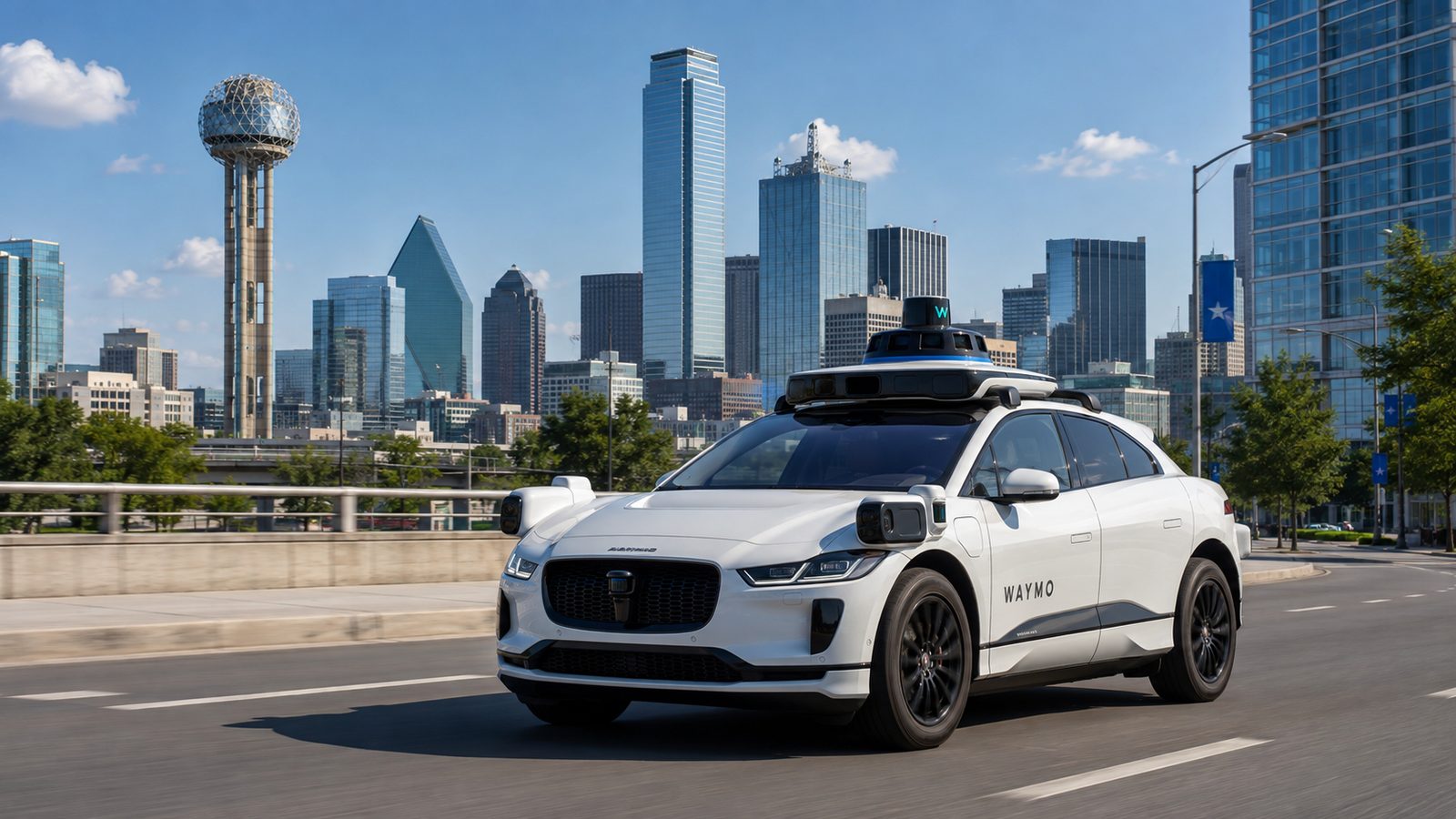
Waymo has launched its fully autonomous robotaxi service in Dallas, bringing driverless rides to another major Texas city.
The Alphabet-owned company began accepting its first public Dallas riders on February 24, 2026. Access initially opened to selected users who had already downloaded the Waymo app.
Waymo launched Dallas alongside Houston, San Antonio, and Orlando. The expansion increased the company’s commercial presence to ten major metropolitan markets.
Waymo Robotaxi Rides Begin With Limited Access
The Dallas launch followed several months of testing on public roads.
During the first phase, Waymo invited selected users from its local waiting list. Additional riders were added gradually as the company expanded its fleet and operating capacity.
Waymo initially said it planned to open the service to more Dallas residents later in 2026. Its website now lists Dallas among the cities where the company is serving riders. Unlike traditional ride-hailing services, Waymo vehicles operate without a driver or safety operator behind the wheel.
Passengers can request a vehicle using the Waymo app. The app displays the estimated fare, pickup location, vehicle details, and trip information.
Where Waymo Operates in Dallas
Waymo’s initial Dallas service area covers several central and southern neighborhoods.
These areas include Downtown Dallas, Deep Ellum, Bishop Arts, East Dallas, South Dallas, and the Park Cities. The early service map also includes parts of Oak Lawn, Love Field, and Lake Highlands. However, coverage does not extend far north of Northwest Highway.
Waymo will likely adjust the service area as it gathers more operational data and adds vehicles. The restricted launch area allows Waymo to manage demand while testing its system across Dallas traffic conditions.
Dallas presents several challenges for autonomous vehicles, including wide roads, complex interchanges, construction zones, and changing weather.
How the Driverless Ride Experience Works
Passengers book their journey through the Waymo mobile app.
After the vehicle arrives, the rider unlocks it using the app. A rooftop display can show the passenger’s initials, helping identify the correct vehicle. Inside, passengers can adjust the temperature, play music, and follow the vehicle’s route on a screen.
Waymo vehicles use cameras, radar, lidar, and machine-learning systems to monitor surrounding traffic. The system identifies pedestrians, cyclists, vehicles, traffic lights, and other road conditions.
Because no human driver is present, passengers do not need to leave a tip. Waymo said Dallas fares would be comparable with prices from established ride-hailing platforms such as Uber and Lyft.
Actual prices depend on distance, trip duration, demand, pickup location, and applicable fees. Riders can view an estimated fare before requesting a vehicle.
Dallas Strengthens Waymo’s Texas Expansion
Dallas is an important market for Waymo because it strengthens the company’s position across Texas. The company already operates robotaxis in Austin, where riders request Waymo vehicles through the Uber app. However, Dallas passengers use Waymo’s own application. That gives the company greater control over pricing, customer access, and the passenger experience.
When Dallas launched, Waymo was already completing more than 400,000 weekly trips across its existing markets. The company said it was targeting more than one million weekly paid rides by the end of 2026. Dallas also has growing competition in autonomous transportation.
Uber previously introduced robotaxi rides in parts of the city through its partnership with autonomous vehicle company Avride. Other companies are also preparing services for the region.
Safety Will Remain a Major Question
Waymo’s expansion comes as regulators and communities continue examining robotaxi safety. The vehicles are designed to follow traffic rules without becoming tired, distracted, or impaired. However, autonomous systems can still encounter unusual situations.
Robotaxis have previously faced difficulties involving construction zones, emergency responders, power outages, and school buses. Waymo has continued updating its software and working with local authorities as its service expands.
For Dallas residents, public confidence will depend on how reliably the vehicles handle everyday traffic and unexpected road conditions.
What Happens Next?
Waymo is expected to add more vehicles and expand its Dallas operating area over time. The company can also use information collected during early rides to improve pickup locations, routes, and vehicle availability.
For passengers, the launch creates another transportation option without requiring them to own or drive a vehicle. For the autonomous vehicle industry, Dallas provides another important test of whether robotaxis can operate reliably across large American cities.
Conclusion
Waymo’s Dallas launch marks another significant step in the expansion of commercial driverless transportation.
The service began with selected riders and a limited operating area. However, Waymo has already positioned Dallas as a key part of its growing national network. Its success will depend on safety, availability, pricing, and how quickly Dallas passengers become comfortable riding without a human driver.




[500]ompong188 Official Login | Trusted Online Casino Malaysia,ompong188 offers fast payout slot sites and a seamless app download for players. Enjoy a secure gaming experience and start winning today. Join now! visit: ompong188
I just finished my account setup and the process was super smooth. Really impressed with how fast everything loads. Check it out at jljl4register
The app is super responsive and makes betting on the go so much easier. I love the clean layout of mostplaybetapp
Really impressed with the fast payouts here. The interface is smooth and I had a great run last night. Definitely checking out krwinbet30 again soon!