
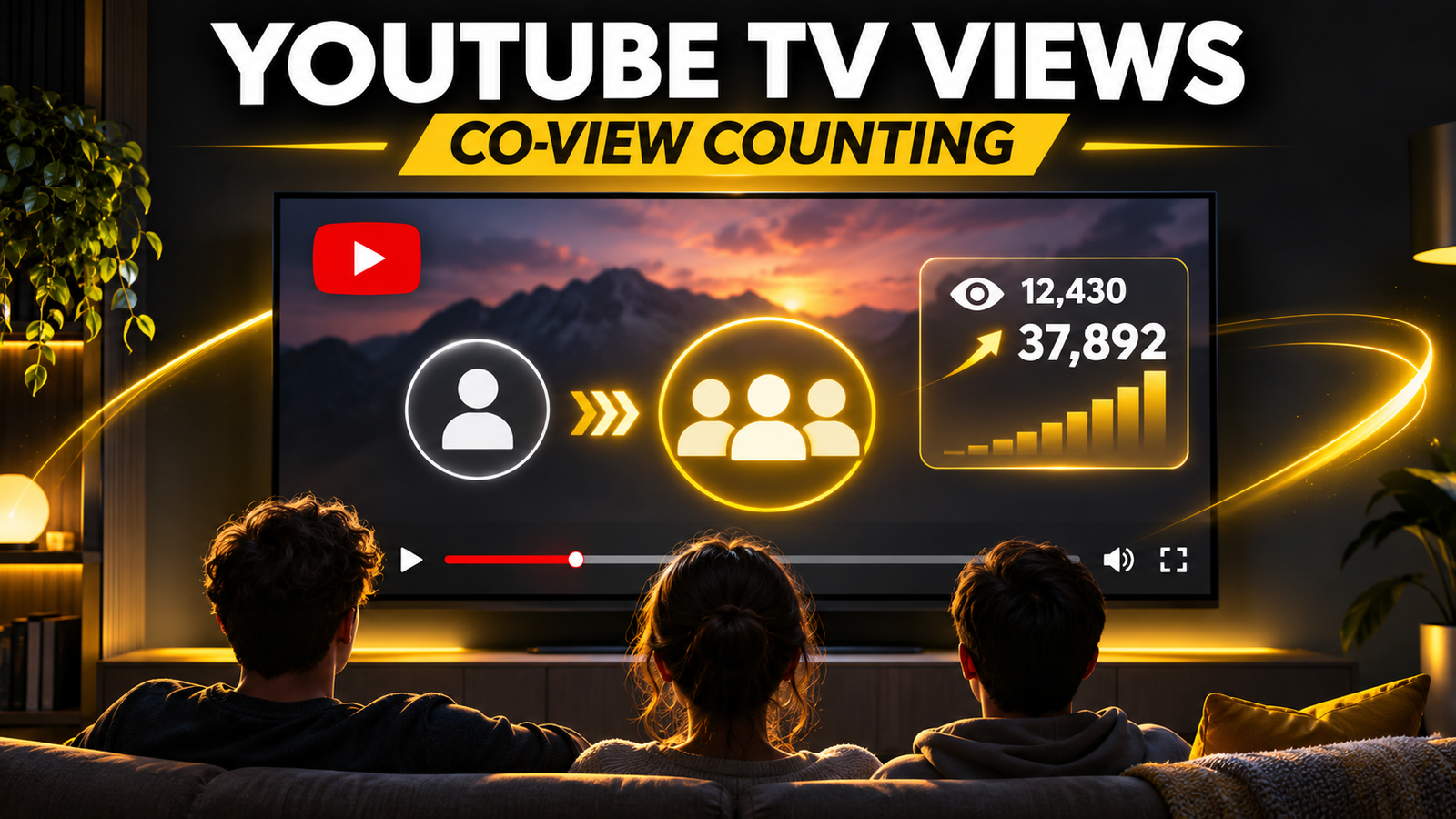
YouTube is changing how it counts views when people watch videos together on a TV.
Starting November 16, 2026, YouTube’s public video view counts include estimated co-views from TV screens. The change aims to give creators a better picture of how many people actually watch their content.
What Are YouTube Co-Views?
Until now, YouTube generally counted one TV playback as one public view.
That could be misleading when several people watched the same video together.
For example, a family of three watching one YouTube video on a TV could previously appear as a single view. YouTube can now estimate additional viewers and include them in the public view count.
YouTube calls these additional viewers co-views.
How Does YouTube Know How Many People Are Watching?
YouTube is not using your TV’s camera or microphone to detect people.
Instead, Google uses an estimation model developed by its researchers.
The model considers signals such as viewer demographics, content information, and viewing times. It then estimates when multiple people may be watching together.
YouTube specifically says cameras, microphones, and device sensors are not used for measuring co-views.
New Co-View Rate in YouTube Studio
Creators will also see a new private metric called Co-view rate inside YouTube Studio.
It will be available through Advanced Mode under Device Type.
For example, a Co-view rate of 1.10 means 1,000 normal TV views could generate around 100 estimated additional co-views.
Creators can calculate views without co-views using:
Total Views ÷ Co-view Rate = Views without co-views
YouTube says the rate can vary depending on the video, audience, region, and viewing behavior.
Does This Affect Phones and Computers?
No.
The new system only applies when people watch YouTube together on TV screens.
Views from smartphones, tablets, and computers continue to count normally as one view per playback.
YouTube says the updated measurement applies across Shorts, regular videos, and live streams.
Will Co-Views Help With YouTube Monetization?
This is an important detail for creators.
Co-views do not change YouTube Partner Program eligibility or creator earnings.
YouTube says YPP qualification will continue using qualified watch hours and qualified Shorts views.
Creator earnings will also continue relying on the existing engaged viewing metrics.
So, creators could see higher public view counts from TV audiences without receiving an equivalent increase in monetization metrics.
Why This Update Matters
TV viewing has become increasingly important for YouTube.
The company says viewers now watch more than one billion hours of YouTube on TVs every day.
Co-viewing could give creators a more realistic picture of their total audience.
It could also help creators demonstrate stronger reach when negotiating sponsorships and brand partnerships.
For creators producing podcasts, entertainment, educational videos, and other TV-friendly content, the change could make television performance more visible.
VerdictByte Take
YouTube’s new co-view system changes what a public “view” represents on television.
Instead of only counting the device playing a video, YouTube now tries to estimate the actual number of people watching.
The update will not directly boost YPP eligibility or earnings. However, it could provide creators with a better understanding of their true living-room audience.