
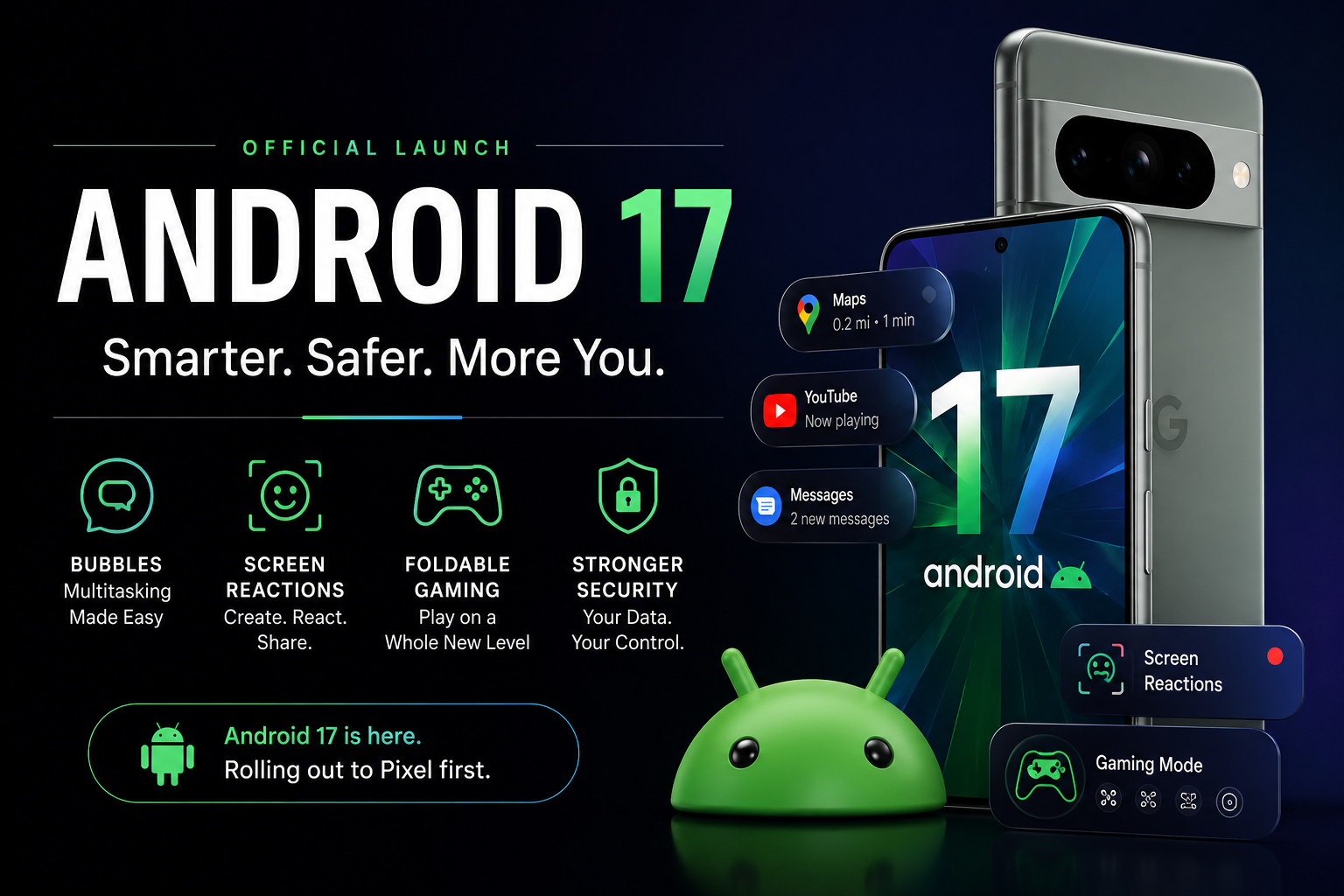
Google has officially launched Android 17, bringing its newest mobile operating system to supported Pixel phones first.
The update focuses on smarter multitasking, creator-friendly tools, stronger security, and better performance across Android devices. Other eligible Android phones will receive the update later in 2026, depending on each manufacturer’s rollout schedule.
Android 17 is not just another yearly software refresh. Google is positioning it as a step toward a more intelligent Android experience. The company wants apps, AI tools, and device hardware to work together more deeply.
Bubbles Make Multitasking Easier
One of the biggest user-facing changes is Bubbles. The feature lets users turn apps into compact floating windows.Users can long-press an app icon and open it as a bubble above other apps. This makes it easier to check maps, notes, videos, chats, or live updates without leaving the current screen.
On tablets and foldable phones, Bubbles get even more useful. Android 17 adds a dedicated bubble bar, making app switching cleaner on larger displays.This move shows Google’s growing focus on foldables and tablets. Android can no longer be designed only for regular smartphones.
Screen Reactions Target Creators
Android 17 also introduces Screen Reactions, a useful tool for social media creators.
The feature lets users record their screen and selfie camera at the same time. That means reaction videos can be created without extra editing apps or green screen setups.
For creators posting tech tutorials, gaming clips, app walkthroughs, or social reactions, this could save serious editing time.
Google is clearly trying to make Android more creator-friendly. The company is also improving Instagram quality, video tools, and AI-powered editing experiences.
Foldable Gaming Gets a Boost
Foldable phones are getting a dedicated gaming mode in Android 17. The new layout uses the top half of a foldable screen for gameplay. The bottom half becomes a dynamic gamepad.
This gives foldable devices a more console-like experience. It also helps Android compete better with gaming handhelds and larger-screen mobile devices. Android 17 also adds native controller remapping. That gives players more control over external controllers.
Security Gets More Personal
Security is another major focus in Android 17. Users can now grant temporary precise location access to apps. They can also share selected contacts instead of giving full address book access.
Google is also improving theft protection through Find Hub. A new “Mark as lost” option can lock a missing phone with biometrics. This matters because phone theft is no longer only about the device. It is about protecting banking apps, private photos, messages, and identity data. Android 17 also strengthens Live Threat Detection and Advanced Protection mode. These tools are designed to block suspicious apps, scams, and advanced attacks.
Better Performance Under the Hood
Android 17 introduces app memory limits to stop apps from using too much RAM. This should help improve multitasking, battery life, and overall stability. It also puts pressure on developers to build cleaner and more efficient apps.
For users, this means fewer slowdowns and fewer background app problems. For developers, it means poor memory management will become harder to ignore.
Pixel Gets the Update First
Supported Pixel phones are receiving Android 17 first. Google says other eligible Android devices will follow through 2026. That means Samsung, OnePlus, Xiaomi, OPPO, vivo, realme, Honor, and other brands may follow their own update timelines.
As usual, Pixel owners get the cleanest and fastest Android rollout. Other users will need to wait for OEM testing and regional approval.
Our Verdict
Android 17 feels like a practical update, not a flashy redesign. Google is focusing on areas that matter in daily use: multitasking, content creation, foldables, privacy, gaming, and performance.
The biggest change is strategic. Android is moving from a phone operating system into a smarter platform for AI-driven devices. For Pixel users, Android 17 is worth installing after backing up important data. For other Android users, the wait now depends on the phone brand.

[2513]bettilt Official Login BD | বিকাশ দিয়ে সেরা ক্যাসিনো বোনাস পান,bettilt এর অফিশিয়াল সাইটে লগইন করে সেরা ক্যাসিনো বোনাস পান। বিকাশ দিয়ে সহজে গেম খেলুন এবং অ্যাপ ডাউনলোড করে স্লট গেমের আনন্দ নিন। আজই জয়েন করুন। visit: bettilt
Honestly the best gaming experience I’ve had in a while. The bonuses are generous and the customer support is top notch. Highly recommend vnnohu77 to everyone.
[678]৯৯৯টিকে অনলাইন বেটিং ও বাংলাদেশে সেরা অনলাইন ক্যাসিনো সাইট,৯৯৯টিকে (999tk) বাংলাদেশে সেরা অনলাইন বেটিং ও অনলাইন ক্যাসিনো সাইট। এখানে পাবেন লাইভ গেমস, স্পোর্টস বেটিং এবং আকর্ষণীয় বোনাস। আজই যুক্ত হয়ে নিরাপদ ও সেরা জয়ের অভিজ্ঞতা নিন! visit: 999tk
I really appreciate the clean layout of the login page. It makes getting into the games so much easier. Keep up the good work jiliplay888comlogin.
Best casino experience I’ve had in a while. The variety of games is insane and the customer support is very responsive. Definitely visit kr500casino for a great time.
A very professional setup with a huge selection of tables. I love the atmosphere and the transparency of the games. I will definitely keep coming back to krevocasino.
[6922]Jeetbaj: অনলাইন ক্যাসিনো প্ল্যাটফর্ম বাংলাদেশি খেলোয়াড়দের জন্য – লগইন,অনলাইনে ক্যাসিনো গেম খেলার জন্য সেরা একটি সাইট Jeetbaj, যেখানে আপনি একাউন্ট খোলার নিয়ম জেনে রেজিস্ট্রেশন করতে পারেন এবং লগইন করে গেম খেলতে পারেন, পাশাপাশি পেমেন্ট সংক্রান্ত তথ্য ও দায়িত্বশীল গেমিং পৃষ্ঠাগুলো পড়তে পারেন। visit: jeetbaj
Honestly one of the best casino experiences I’ve had online. The graphics are crisp and the loyalty rewards are a nice touch. xx88casino is a winner.