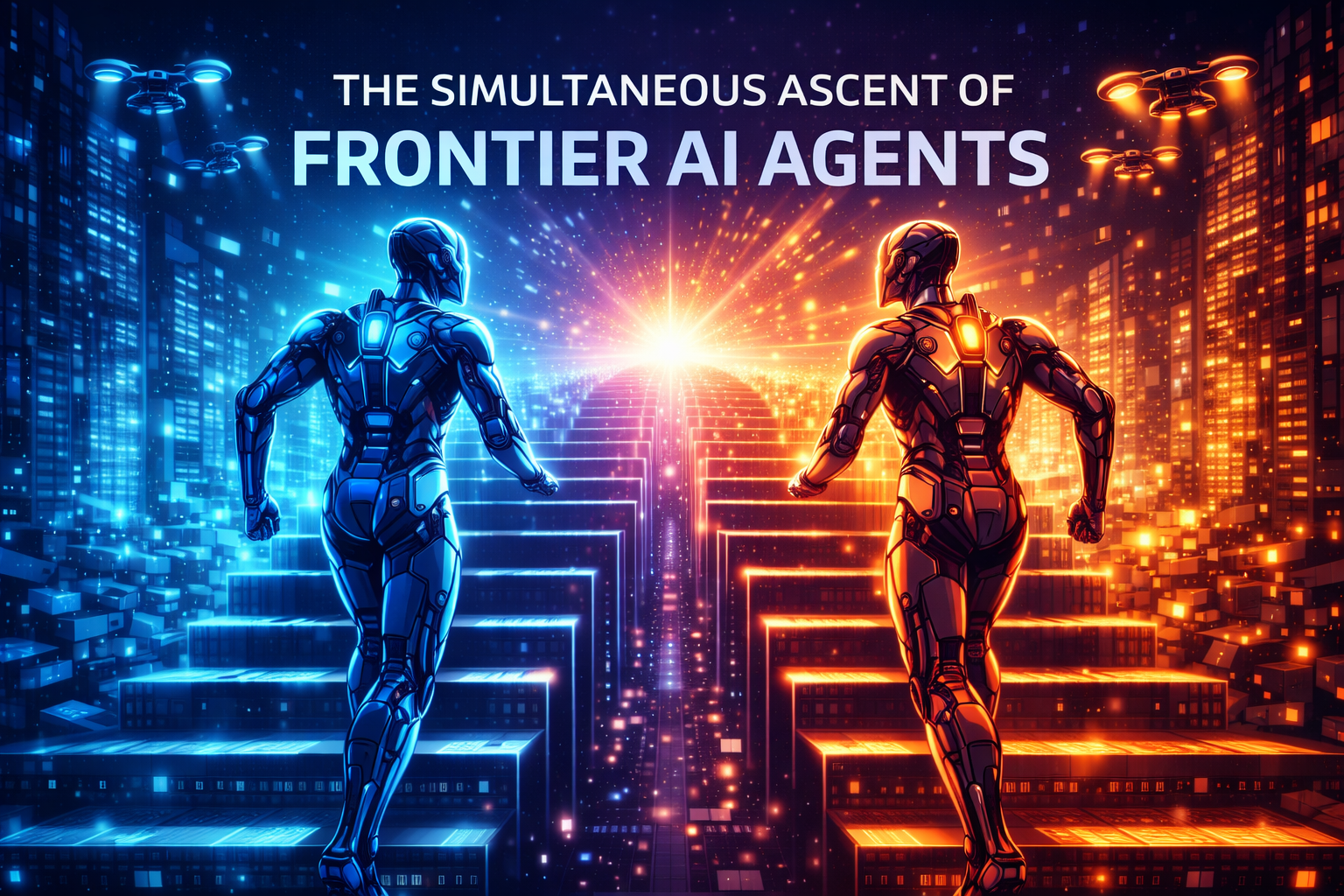
Anthropic and OpenAI have escalated the AI arms race by launching new frontier models on the same day, each claiming state‑of‑the‑art performance in reasoning and agentic capabilities. Anthropic released Claude Opus 4.6, while OpenAI introduced GPT‑5.3‑Codex, with both tools heavily marketed around coding and autonomous workflows.
Anthropic’s Claude Opus 4.6 emphasizes strong reasoning across legal, financial, and productivity benchmarks, aiming to appeal to enterprises that need reliable decision support. The model’s ability to decide when to think deeply and when to respond quickly is highlighted as a key advantage in real‑world usage. OpenAI’s GPT‑5.3‑Codex, on the other hand, is framed as an end‑to‑end development assistant that can handle complex software projects with minimal human intervention.
The simultaneous releases reflect a broader shift in the market from simple chat interfaces to AI systems that function as embedded infrastructure. With both companies investing heavily in agent frameworks and orchestration, customers are being encouraged to build workflows where multiple AI components collaborate behind the scenes.
Investors and enterprises are paying close attention to how these models perform in production environments, particularly in terms of reliability, safety, and cost. Benchmark results and early case studies are becoming critical marketing tools as each provider tries to demonstrate superiority on real business tasks rather than only synthetic tests.
For users, this competition is likely to bring faster iteration, more powerful tools, and potentially better pricing over time. At the same time, the pace of change raises new challenges in governance, model evaluation, and vendor lock‑in, as organizations commit to platforms that may evolve rapidly over the next few years.